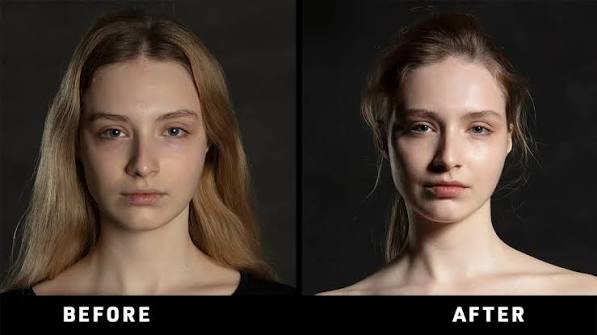
A red light before-and-after photograph can suggest a question worth discussing, but it cannot predict your result. The image may leave out changes in lighting, the person’s other care and the reason the treatment was chosen. Before turning an appealing picture into a booking, find out what story the photograph is actually able to support.
Notice what changed in the photograph itself
Begin with the visible conditions rather than the treatment claim. Are the camera angle, distance and expression similar? Is the hair arranged differently, or is one face photographed with makeup and the other without it? You do not need to become a photography specialist. You are noticing whether the two images offer a reasonably comparable view of the feature that interests you.
A cropped social-media image may remove context that appears on the original page. Look for the accompanying explanation before deciding what the picture means. If a date or treatment description is absent, record that as an unanswered question. Missing information is not proof of deception, but it limits what you can conclude from the image alone.
Pay attention to what attracted you. It may be a brighter overall photograph, a flattering hairstyle or an expression that looks happier, rather than a clear change in the specific concern you want to address. Naming the feature helps separate your own goal from the general impression created by the presentation. You can like the image without treating every difference as a treatment effect.
Do not try to estimate a clinical improvement by enlarging the picture on your phone. Compression and display settings add another layer between the original observation and what you see. If a provider uses photographs during consultation, ask how they document the concern and compare images over time. The explanation should connect the method to the question being assessed.
Also distinguish a manufacturer’s illustration, a provider’s patient example and a customer’s personal post. They have different contexts, which should be identified clearly. An image used to explain a device is not automatically an example of a result achieved with the exact appointment being advertised. If the relationship is unclear, ask the provider to explain it.
Look for the missing account of care
A before-and-after pair rarely tells you everything that happened between the two photographs. Ask whether the person received other treatments or changed their skincare during the period shown. If several elements were involved, the image does not isolate the contribution of one service. That matters when you are considering buying only the LED component of a broader plan.
The American Academy of Dermatology’s red-light overview explains that dermatologists may use red light as part of a treatment plan and that study methods and devices vary. It also notes that results are not universal. A single photograph therefore belongs beside a careful explanation of the proposed use, rather than standing in for evidence about every person or concern.
Ask about the time represented by the image without turning it into your own deadline. How long elapsed, what service was used and what follow-up occurred? A photograph taken after a series is different from one taken immediately after a facial. Check whether the caption identifies the timing of both photographs, or merely names the month the post was uploaded. Those dates serve different purposes. The answer may help you understand the example while still leaving your individual suitability and likely course unresolved.
Be wary of moving a claim between skin and hair simply because both are discussed under a light-therapy heading. A skin photograph cannot demonstrate a hair outcome. Similarly, a result concerning one type of hair loss does not explain a different person’s cause of thinning. If your concern is medical, bring it to the appropriate clinician for assessment rather than attempting to match yourself to an image.
Technical details should clarify this account. The name of the device, the intended purpose and the relevant evidence can help a professional explain a recommendation. A list of wavelengths or a familiar brand logo by itself does not answer whether the example applies to you. Ask for the connection in language you can understand before comparing treatment packages.
Keep one person’s image separate from your consent
For a local starting point, the LED services described by Truly You identify specific beauty appointments in Mississauga. Read the actual service description alongside any image that caught your attention. Then ask which components are being proposed for your concern and what limitations should inform the decision. The service menu and your consultation need to describe the same thing.
Your circumstances belong in that discussion even when the photograph shows someone who looks similar. Share relevant health information through the provider’s requested process and ask a qualified clinician about medical suitability. Visual resemblance cannot establish that two people have the same condition, use the same medication or would respond similarly to a procedure.
If the provider wants to photograph your own progress, clarify how those images would be used and stored. Ask whether documentation of care is separate from permission to use photographs in marketing. Read the actual consent wording and express your preference before pictures are shared. Do not assume the use shown in someone else’s post is the only option available to you.
Save the image if it helps you explain your interest, and write one question beside it: what would need to be true for this example to be relevant to my concern? That question gives the photograph a useful role in the consultation while leaving the decision where it belongs, with an explanation of your own proposed care.